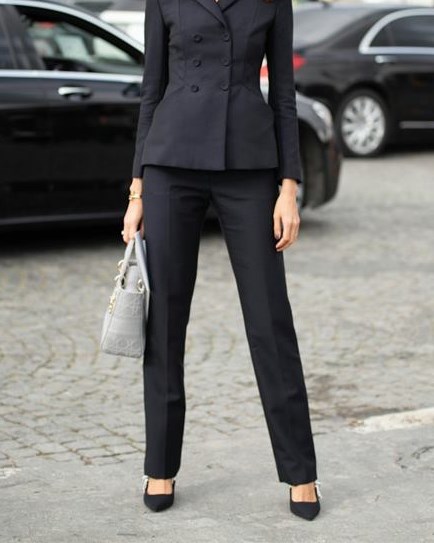
 Example
The sharp tailored suit looks refined, but a richer leather bag would complement the deep navy wool better.
Rate your outfit 0–100 in seconds, plus the one swap that fixes it.
Takes about 5 seconds
ExampleThe sharp tailored suit looks refined, but a richer leather bag would complement the deep navy wool better.
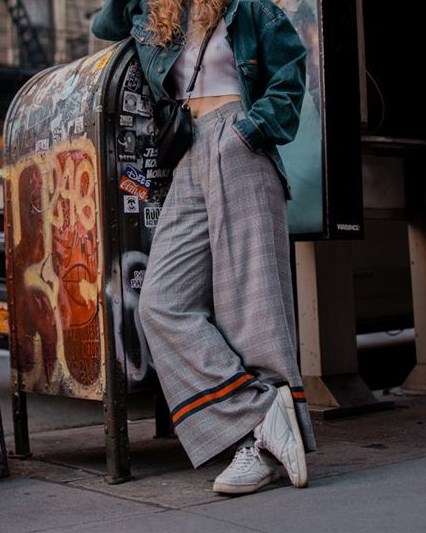 Example
The relaxed streetwear pieces combine nicely, though the trousers bunch heavily at the sneakers and break the line.
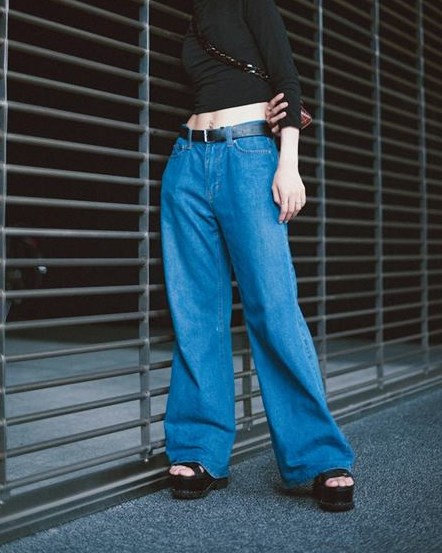 Example
The slim cropped top balances the wide denim, but chunky open platform sandals clash with full-length heavy jeans.
Not sure if an outfit matches? Add a photo of the full look and a photo of the piece you are unsure about, and you get a clear answer in seconds. It helps when a new top meets old trousers and you wonder, does this match? It also helps when you are asking does this outfit match the occasion, or you just want a fast way to rate my fit before heading out the door. The tool looks only at how the clothes work together: color, proportion and style. You receive a score from 0 to 100, a short verdict, and one specific swap to try. No more standing at the mirror wondering does this outfit look good with those shoes. Just upload, check, and go.
Start with a clear photo of the full outfit, taken in good light with the whole look in frame. If you want to test one piece against it, such as a pair of shoes, a bag, a jacket or glasses, add a second photo of that piece on its own. To see which of two outfits works better, add a second full-body photo and choose Comparing two outfits. Select Check the match and the photos are shrunk in your browser before they are sent, so it stays quick even on a slow connection. A few seconds later you get a score from 0 to 100, a one-line verdict, and the swap that would help most. Nothing needs to be installed, and you can check as many different outfits as your free checks allow.
The score is a quick read on how well the pieces in the photo work together, not a verdict on you. It is built from three parts: color, proportion and occasion. Each part answers one question, and the weakest part is usually where the best swap comes from. A score of 80 or more is a Great match, 60 to 79 is One tweak away, and anything under 60 Needs a swap. High scores are rare on purpose, so even a Great match comes with one thing you could still improve. Treat the number as a starting point for a decision rather than a rule.
Whether the colors of the pieces sit well together, from close shades to a deliberate contrast.
How the length, volume and shape of each piece balance against the others.
Whether the formality and the season of the pieces agree with each other.
Every result ends with one concrete change: what to replace and what to try in its place, plus one or two backups when they are genuinely different. The swap stays within what is already in the photo, such as the shoes, the length of a trouser hem, an inner layer or a single accessory, so it never sends you shopping before you can act on it. When you check a piece, the pieces already on you are treated as fixed and only the item you are testing is up for change. When you compare two outfits, the swap goes to the one that scores lower. The reason is written in plain words, so you can see why the swap helps and decide for yourself.
These answers explain how the check works, what to upload, and what the result includes. The tool focuses on how the clothes work together, not on personal style rules.
It compares the clothing shown in your photos and returns a score, a short verdict, and one suggested swap. The comparison considers color, proportion, and occasion.
Yes. Upload a photo of the full outfit and a separate photo of the single piece you want to check.
No. You can use the outfit checker in your browser without installing an app.
Yes. The outfit check is free to try.
Use clear, well-lit photos where the whole outfit and the item are easy to see. JPG, PNG, and WebP are accepted; each image must be at least 400 pixels on each side and no larger than 8 MB.
No. We only evaluate how the pieces of clothing match each other.
Matching is less about strict rules and more about whether the pieces agree on a few simple things: a shared color story, a balance of lengths and volumes, and a level of dressiness that fits the setting. A bold piece can work beside quiet ones, and mixing styles is fine when one of those three things holds the look together. Use the score and the swap as one opinion, try the change if it makes sense, and keep the version that feels right when you wear it. The check only ever looks at the clothes, never at the person wearing them.